Emergency Water Extraction & Structural Drying
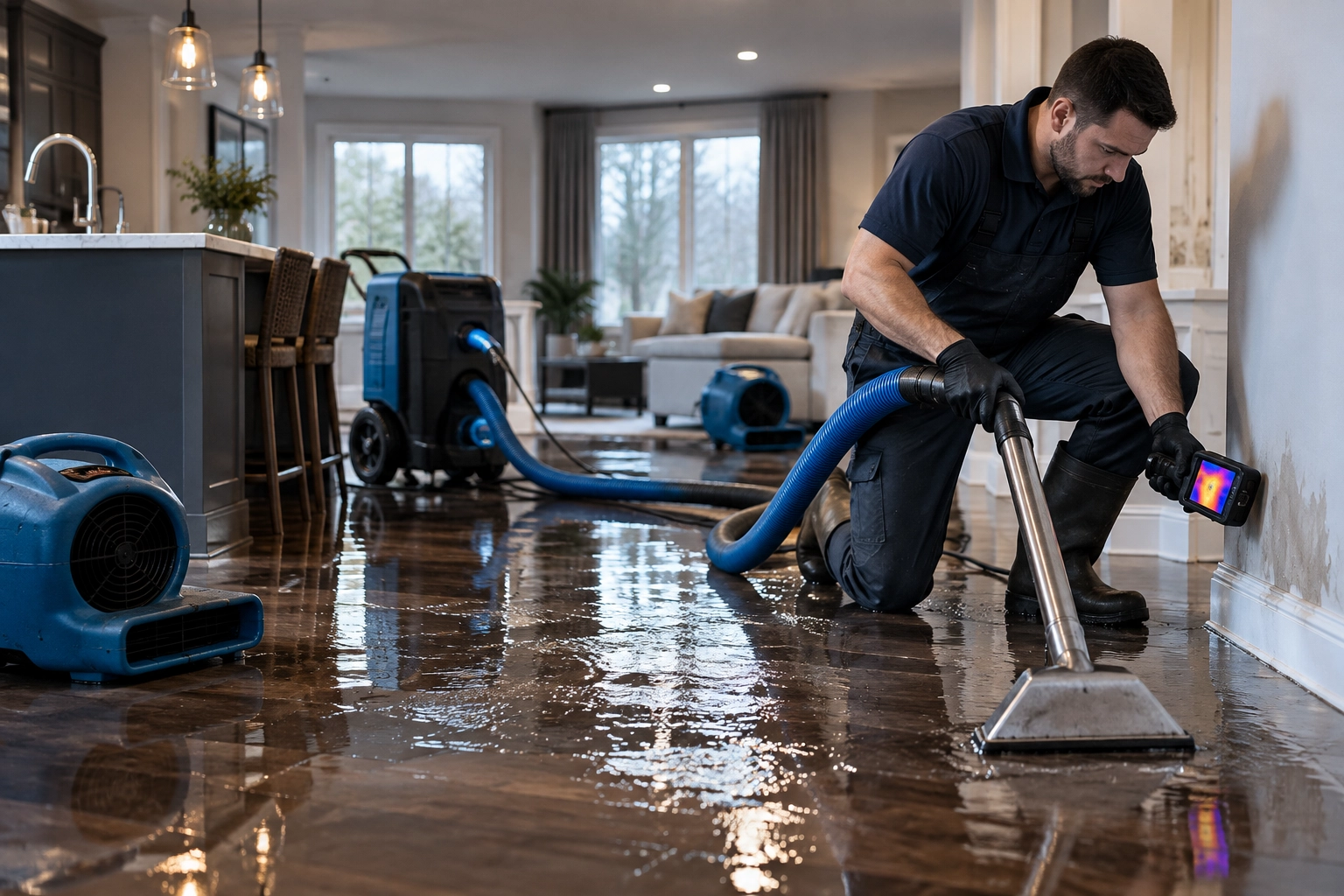
Water migration happens within minutes. Our rapid-deployment crews utilize industrial submersible pumps, FLIR infrared thermography, and high-velocity desiccant dehumidifiers to extract water and prevent permanent structural warp.
Complete Disaster Water Mitigation Protocol
Whether triggered by a burst pressurized mainline, foundation seepage, or severe storm flooding, standing water causes immediate, progressive damage to building materials. Porous structures such as drywall, hardwood flooring, insulation, and subflooring rapidly absorb moisture, compromising integrity and establishing breeding grounds for toxic black mold within 24 to 48 hours.
At AQUAFIRE, we enforce strict compliance with the IICRC S500 Standard for Professional Water Damage Restoration. Our certified technicians do not just remove surface water; we isolate moisture trapped inside wall cavities and structural assemblies using non-destructive thermodynamic drying technology.

Emergency 24-Hour Structural Board-Up & Tarping
We utilize precision diagnostic equipment to map hidden moisture paths before beginning structural stabilization:
- FLIR Thermal Imaging Systems: Detect hidden water reservoirs inside drywall, ceilings, and under subfloors without tearing down walls prematurely.
- Tramex Penetrating & Non-Penetrating Moisture Meters: Provide precise percent-moisture content (%MC) readings for structural lumber and concrete base plates.
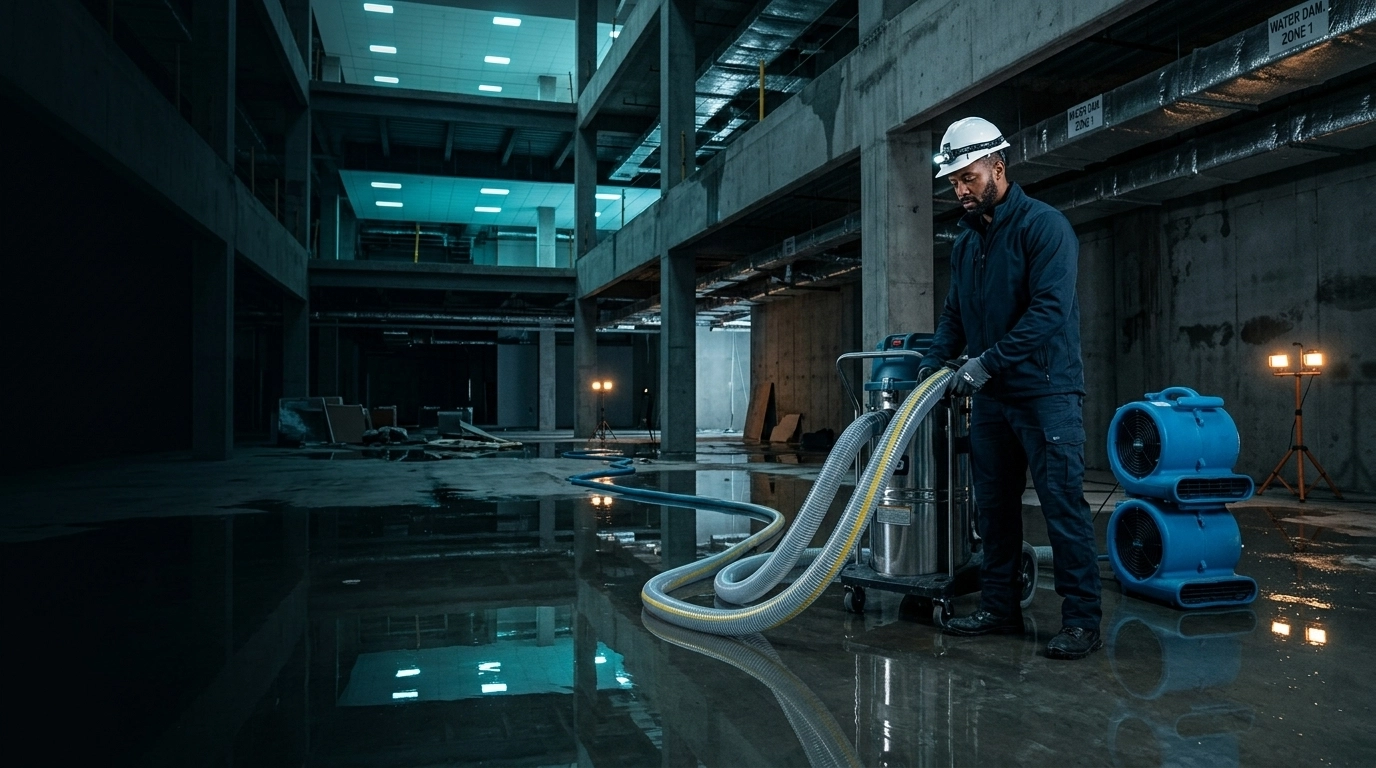
- Truck-Mounted Submersible Hydro-Extractors: Vacuum water out of carpets and structural subflooring at up to 1,200 CFM (Cubic Feet per Minute).
Deep Molecular Smoke Odor Eradication
Smoke particles penetrate deeply into porous structural materials, insulation, and wall cavities, continuing to release harmful volatile organic compounds (VOCs) long after a fire has been extinguished. Standard surface cleaning cannot remove these micro-particles.
Our specialized restoration teams deploy advanced hydroxyl generators, thermal fogging systems, and high-output ozone treatments to break down smoke molecules at a cellular level, completely neutralizing persistent odors and restoring indoor air quality to safe standards.
IICRC Contamination Risk Assessment
Thermodynamic restoration protocols change depending on the fluid toxicity tier:
Category 1: Sanitary
Clean water supply leaks. Structural drying begins immediately without hazardous waste teardown.
Category 2: Grey Risk
Washing/dishwasher overflow containing bio-chemical load. Requires targeted sanitization wash.
Category 3: Black Toxic
Sewage/river flood. Full Hazmat containment, EPA disinfectant spray, and material extraction required.
Structural Drying Timeline & Execution
Our chronological execution framework for complete moisture isolation:
Non-Destructive Thermal Perimeter Mapping
FLIR thermography locates subterranean water pockets behind sheetrock and beneath concrete slabs.
High-CFM Vacuum Extraction
Truck-powered extraction units pull 85-90% of free-standing liquid directly into containment tanks.
Bio-Sanitization & Microbe Neutralization
Botanical antimicrobial fogging locks down bacterial growth and stops mold germination within 24 hours.
LGR & Desiccant Thermodynamic Drying
Industrial air movers and Low Grain Refrigerant dehumidifiers pull deep-seated humidity from framing studs.
Daily Psychrometric Moisture Audit
Technicians log daily ambient temperature, relative humidity, and pinpoint %MC dry-standards.
Structural Reconstruction & Claims Sign-Off
Finishing touches, drywall reconstruction, and direct insurance carrier loss audit clearance.
Deployment Equipment Technical Matrix
Commercial grade restoration hardware utilized on-site:
| Equipment Unit | Operation Capacity | Primary Function |
|---|---|---|
| LGR Dehumidifier 7000X | 130 Pints / Day @ AHAM | Structural air water vapor extraction |
| Phoenix Axial Air Mover | 3000 CFM Velocity | Evaporation rate acceleration |
| Tramex Moisture Master | 0.1% %MC Sensitivity | Subflooring & stud moisture detection |
| HEPA Air Scrubber 2000 | 99.97% @ 0.3 Microns | Particulate & mold spore filtration |
Emergency Protocol Guidance
Actions to execute while our rapid deployment truck is en route to your location:
✔ Safe Mitigation Actions
- • Shut off main water line valve immediately.
- • Disconnect main electrical breaker if water touches outlets.
- • Prop up wet furniture cushions and remove light rugs.
✖ Hazard Restrictions
- • Do not operate regular household vacuums in standing water.
- • Avoid entering rooms with sagging ceiling plaster.
- • Do not turn on built-in HVAC systems if sewage is present.