Microbial Mold Remediation & Safe Spore Extraction
Toxic mold (such as Stachybotrys chartarum) degrades indoor air quality and structural integrity. We construct negative air pressure containment zones to destroy active spores without cross-contaminating unaffected rooms.
Engineering-Grade Mold Containment Protocol
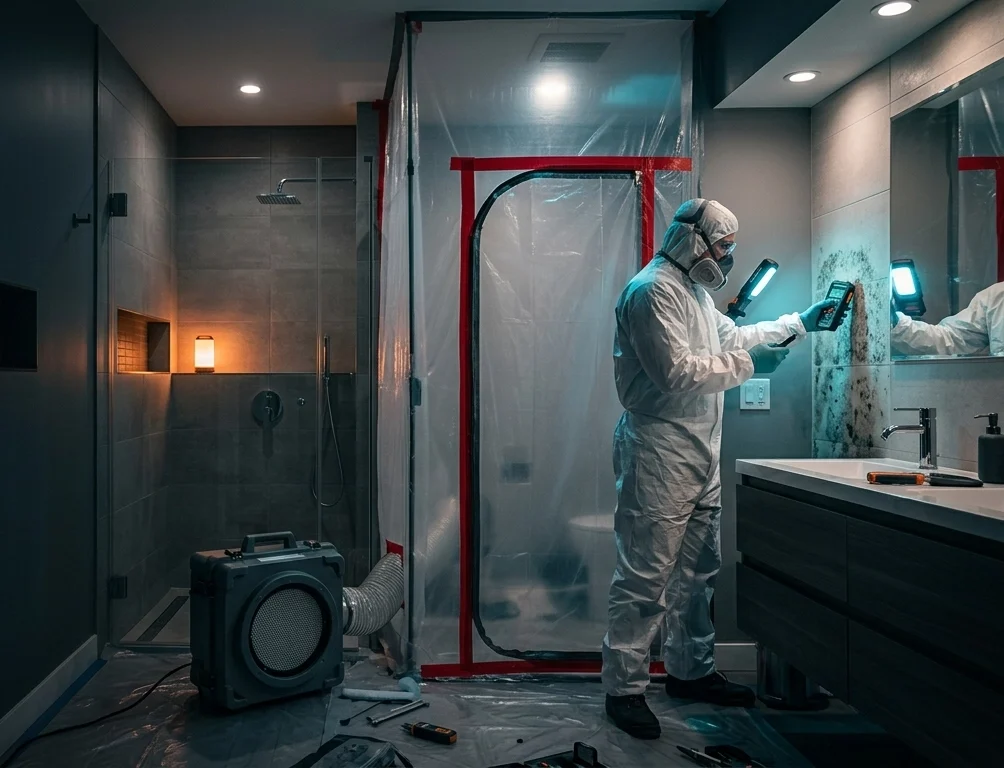
Improper mold removal often spreads millions of microscopic fungal spores throughout an entire HVAC system, dramatically escalating air toxicity. AQUAFIRE adheres strictly to the IICRC S520 Standard for Professional Mold Remediation.
Before removing any contaminated materials (such as affected drywall, acoustic tiles, or insulation), our technicians establish physical isolation barriers using 6-mil flame-retardant poly sheeting and negative-pressure HEPA air scrubbing units.



The 5-Phase Remediation System
Our systematic approach guarantees complete clearance without secondary outbreak:
- 1. Environmental Air Testing & Moisture Mapping: Independent lab sampling to identify airborne fungal spore concentrations (% relative humidity and surface moisture logging).
- 2. HEPA Air Filtration Containment: Continuous negative air pressure deployment ensuring spores cannot escape into living zones.
- 3. Controlled Demolition & HEPA Vacuuming: Safe removal of unsalvageable porous items using 99.97% efficient HEPA vacuum filtration.
- 4. Antimicrobial Bio-Wiping: Application of EPA-registered fungicide coatings on non-porous framing to prevent secondary colony re-growth.
- 5. Post-Remediation Verification (PRV): Final clearance testing validating normal fungal ecology before restoring drywall.
Step-by-Step Microbial Decontamination
From initial detection to post-clearance laboratory validation, our workflow ensures 100% elimination of active colonies.
1. Thermal Imaging & Moisture Detection
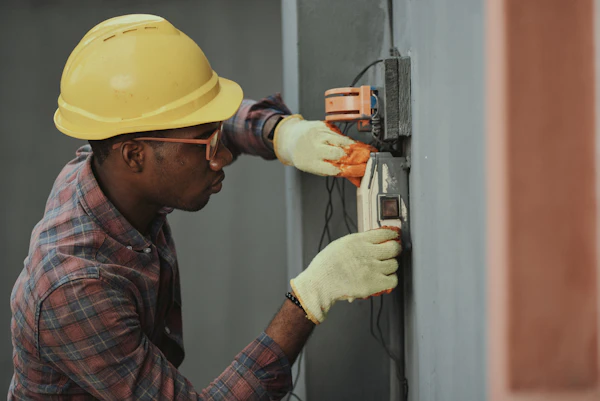
Detecting hidden water pockets behind drywall and under subfloors using FLIR infrared cameras.
2. Critical Barrier Containment
Constructing heavy-duty plastic containment walls with airlocks to isolate infected zones completely.
3. HEPA Negative Air Extraction
Running industrial air scrubbers to capture airborne spores down to 0.3 microns at 99.97% efficiency.
4. Antimicrobial Sealing & Clearance Test
Applying EPA-registered fungicidal encapsulants and conducting third-party air quality testing.
Deep Structural Framing De-Molding & Barrier Protection
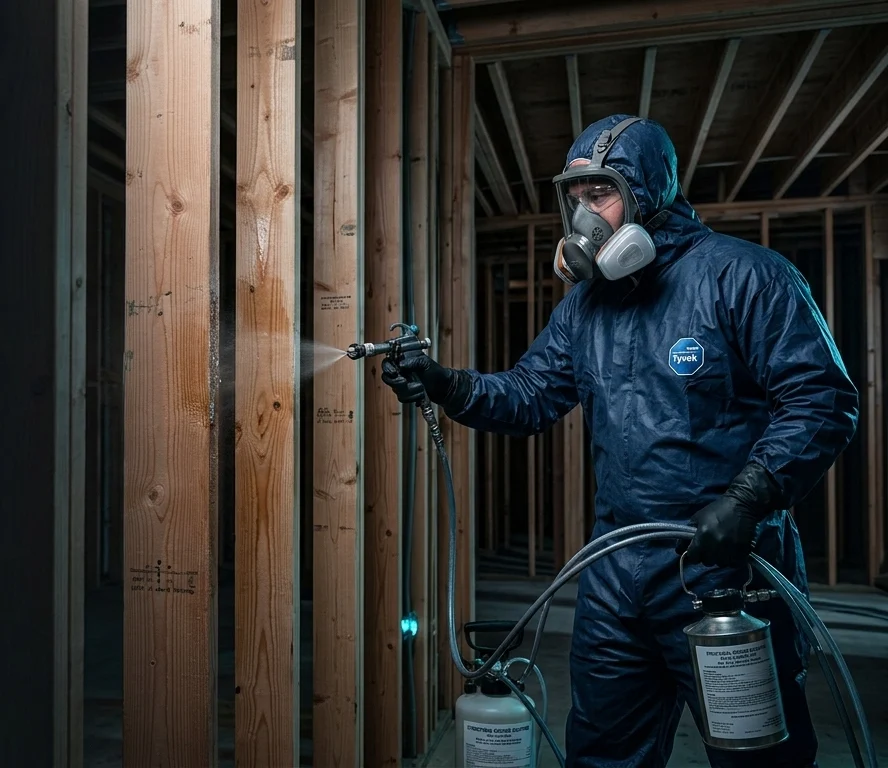
Standard surface cleaning often leaves fungal roots deep inside porous wood studs. Our certified technicians apply EPA-registered industrial biocides directly to exposed framing, neutralizing active mold colonies down to the microscopic level.
- ✓ Penetrates deep wood grain without weakening timber structure.
- ✓ Formulated with zero-VOC, non-toxic antimicrobial barriers.
- ✓ Prevents future fungal regrowth under high humidity conditions.
Remediation Equipment & Chemical Standards
Certified filtration and chemical agents used in our containment procedures:
| Equipment / Agent | Specification Rating | Operational Function |
|---|---|---|
| HEPA Air Scrubber | 99.97% Filtration @ 0.3 Microns | Continuous airborne spore extraction |
| EPA Fungicidal Sealant | Zero VOC / Antimicrobial | Seals timber framing against future mold growth |
| Infrared Moisture Meter | Sub-surface Pinless Scanning | Locates hidden dampness inside wall cavities |
| Negative Pressure Monitor | Real-time Digital Gauge | Maintains containment pressure differentials |
Health Risks Associated with Indoor Mold
Prolonged exposure to active indoor fungal colonies can lead to severe health issues. Protecting your property's air quality is crucial for occupant safety.
Respiratory Symptoms
Chronic coughing, wheezing, throat irritation, and heightened asthma attacks in vulnerable individuals.
Allergic Reactions
Persistent sinus congestion, watery eyes, skin rashes, and chronic fatigue caused by mycotoxins.